Continental vs English Knitting: Which Style Fits Your Hands Better
New knitters often learn whichever style their teacher happened to use, without knowing an entirely different hand mechanic exists that might suit them better. Continental and English knitting produce identical stitches through very different hand movements, and the difference matters more than most beginners realize.

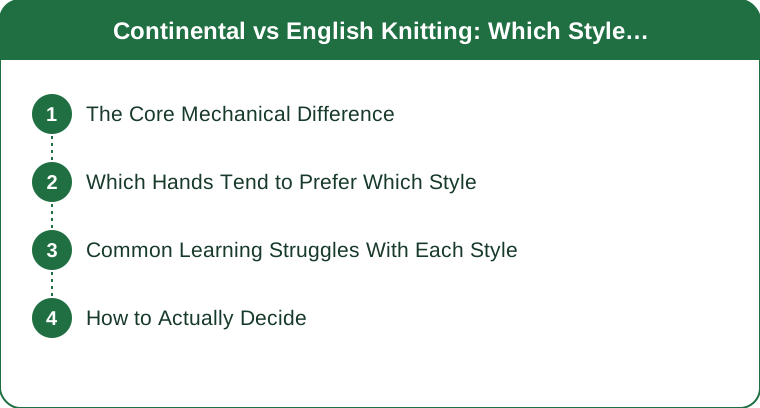
The Core Mechanical Difference
The distinction: the the-yarn-hand-position (Continental style holding the working yarn in the left hand while English style holds it in the right hand, which is the fundamental difference underlying everything else), the the-yarn-picking-vs-throwing (Continental knitting using a smaller ‘picking’ motion to catch the yarn with the needle, while English knitting uses a larger ‘throwing’ motion wrapping the yarn around the needle), the the-speed-potential-difference (Continental’s smaller hand movements generally allowing for faster knitting once the technique is fully learned, though English can also reach good speed with practice).
Which Hands Tend to Prefer Which Style
The fit factors: the the-crochet-background-advantage (knitters with a crochet background often finding Continental more intuitive, since crochet’s yarn-in-left-hand tension is similar), the the-dexterity-in-non-dominant-hand (Continental placing more fine-motor demand on the left hand’s tensioning, which some right-hand-dominant knitters find awkward at first regardless of overall skill), the the-larger-movement-preference (some knitters simply preferring English’s larger, more visible hand movements as easier to monitor and correct while learning).

Common Learning Struggles With Each Style
The typical hurdles: the the-continental-tension-consistency (new Continental knitters often struggling most with consistent yarn tension using the picking motion, leading to uneven stitches early on), the the-english-hand-fatigue (new English knitters sometimes experiencing more hand and wrist fatigue from the larger throwing motion repeated over a long project), the the-muscle-memory-transfer-difficulty (knitters who learned one style first often finding it surprisingly hard to switch, since the muscle memory is quite specific to the hand mechanics involved).
How to Actually Decide
The practical test: the the-try-both-on-simple-swatch (knitting a small practice swatch in both styles before committing to one, since written descriptions rarely convey which will feel natural), the the-video-tutorial-comparison (watching a side-by-side video comparison of both styles’ hand movements, which clarifies the difference far better than text alone), and the frame (Continental and English knitting produce the same stitches through different hand mechanics — trying both on a small swatch, rather than defaulting to whichever a teacher happened to use, is the fastest way to find the one that fits your hands.)
The choice between Continental and English knitting rarely gets presented as a choice at all — most beginners simply learn whatever style their first teacher or tutorial happened to use, without knowing the other exists as a genuinely different hand mechanic producing the same stitches. Continental holds the working yarn in the left hand and uses a smaller picking motion, which tends to suit knitters with a crochet background and can eventually knit faster once mastered. English holds the yarn in the right hand with a larger throwing motion that some beginners find easier to monitor and correct while still learning, even if it costs a bit more hand fatigue over a long session. Neither style is objectively superior, and switching later is harder than it sounds because the muscle memory involved is quite specific to each mechanic. The only real way to know which fits is knitting the same small swatch both ways and noticing which one felt less like fighting your own hands.
Keep Reading
This article is for general informational and styling purposes only. Fit, sizing, and product availability may vary.