Knitting Before Bed: Why 20 Minutes of Stitches Beats an Hour of Scrolling
Quick Answer: Knitting before bed works because it occupies your hands and eyes with slow, repetitive, predictable motion — the opposite of a phone’s bright light and infinite novelty. Swap 20 minutes of scrolling for simple stitches and most people fall asleep noticeably faster within a week or two.
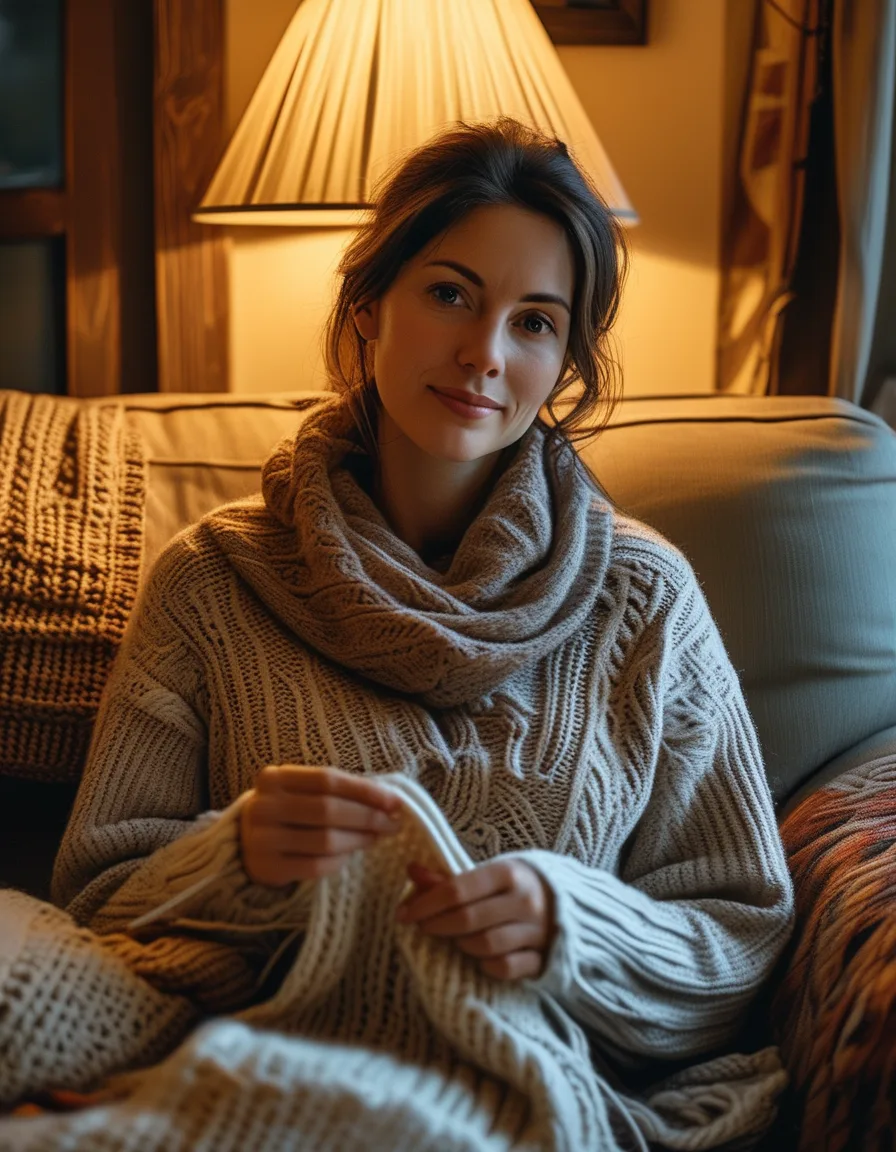
You tell yourself it’s five minutes of scrolling. Forty minutes later you’re wide awake, annoyed, and somehow watching a video about competitive cheese rolling. Your hands wanted something to do — you just gave them the wrong thing.

Why does knitting make you sleepy when scrolling doesn’t?
Three differences do the work:
- Light: Your phone pushes bright, blue-heavy light into your eyes at close range; knitting happens under a warm lamp with your gaze angled down.
- Novelty: Every swipe delivers something new, which keeps your brain alert and hunting. A stitch pattern delivers the same thing again and again — and predictability is what lets alertness power down.
- Endpoint: A row ends. A feed doesn’t. Knitting has natural stopping points built in every few minutes; the scroll is engineered to never offer one.
Repetitive bilateral hand movement also gives restless energy somewhere to go — the same reason people fidget when anxious, but channeled into something with a finish line.
What should I actually knit at bedtime?
The boring project is the right project. Save the colorwork chart for daylight.
Ideal bedtime knitting is pure stockinette or simple garter — a scarf, a plain sock leg, a dishcloth — something your hands can run on autopilot. If you have to count or check a chart more than about once every 5 minutes, it’s too engaging for this job.
Keep a dedicated ‘sleep project’ by your evening chair so there’s zero setup friction. Needle tip: wood or bamboo needles are quieter and warmer-feeling than metal at night — a small thing that matters more than it sounds.
5 Mistakes Everyone Makes With Bedtime Knitting
1. Picking a project with deadlines. A gift due Friday turns relaxation into overtime.
2. Knitting under bright overhead light. Use a warm side lamp — you’re trying to dim the room, not floodlight it.
3. One more row syndrome. Set a soft cap: 20-30 minutes or 2 rows past comfortable, whichever comes first. Yes, knitters have their own version of doomscrolling.
4. Keeping the phone next to you. It will win. Charge it across the room during knitting time.
5. Choosing splitty yarn. Fighting a splitting strand at 10pm is not calm. Smooth, medium-weight yarn only.
Number 3 is the one that gets everyone eventually — the craft is relaxing, but it’s not that innocent.
FAQ: Bedtime Knitting Questions, Answered
How long before bed should I knit?
The 20-30 minutes right before lights-out works best, ideally as the last activity after screens are done. It acts as a buffer between the day’s stimulation and sleep.
Does crochet work the same way?
Yes — the mechanism is the repetitive motion, downward gaze, and predictable rhythm, all of which crochet shares. Pick whichever craft your hands run on autopilot.
What if knitting makes my hands ache at night?
Keep sessions short, loosen your grip, and stretch your wrists after. If aching persists, it’s a tension or ergonomics issue worth fixing for daytime knitting too — and worth mentioning to a professional if it doesn’t ease.
TL;DR:
- Knitting beats scrolling before bed on three counts: warm light instead of blue, repetition instead of novelty, natural endpoints instead of infinite feed
- Use a dead-simple dedicated project (stockinette scarf, plain sock) — boring is the feature
- Warm side lamp, phone across the room, 20-30 minute soft cap
- Watch out for ‘one more row’ — knitters have their own doomscroll
Your hands were always going to do something before bed. Give them the version with an off switch.
Keep Reading
This article is for general informational and styling purposes only. Fit, sizing, and product availability may vary.