Why Your Neck and Shoulders Hurt After Knitting (and the Setup That Fixes It)
Quick Answer: Knitting-related neck and shoulder pain usually comes from a forward head tilt held for extended periods while looking down at your work, combined with rounded, elevated shoulders from gripping needles tensely — raising your work closer to eye level and consciously relaxing your shoulders addresses most of it.
You finish a long knitting session feeling accomplished about the progress and then notice your neck and shoulders are tight and achy in a way that seems disproportionate to how gentle the activity felt. That mismatch is common, and it’s almost entirely about sustained posture, not the knitting motion itself.
Why does knitting specifically strain the neck and shoulders?
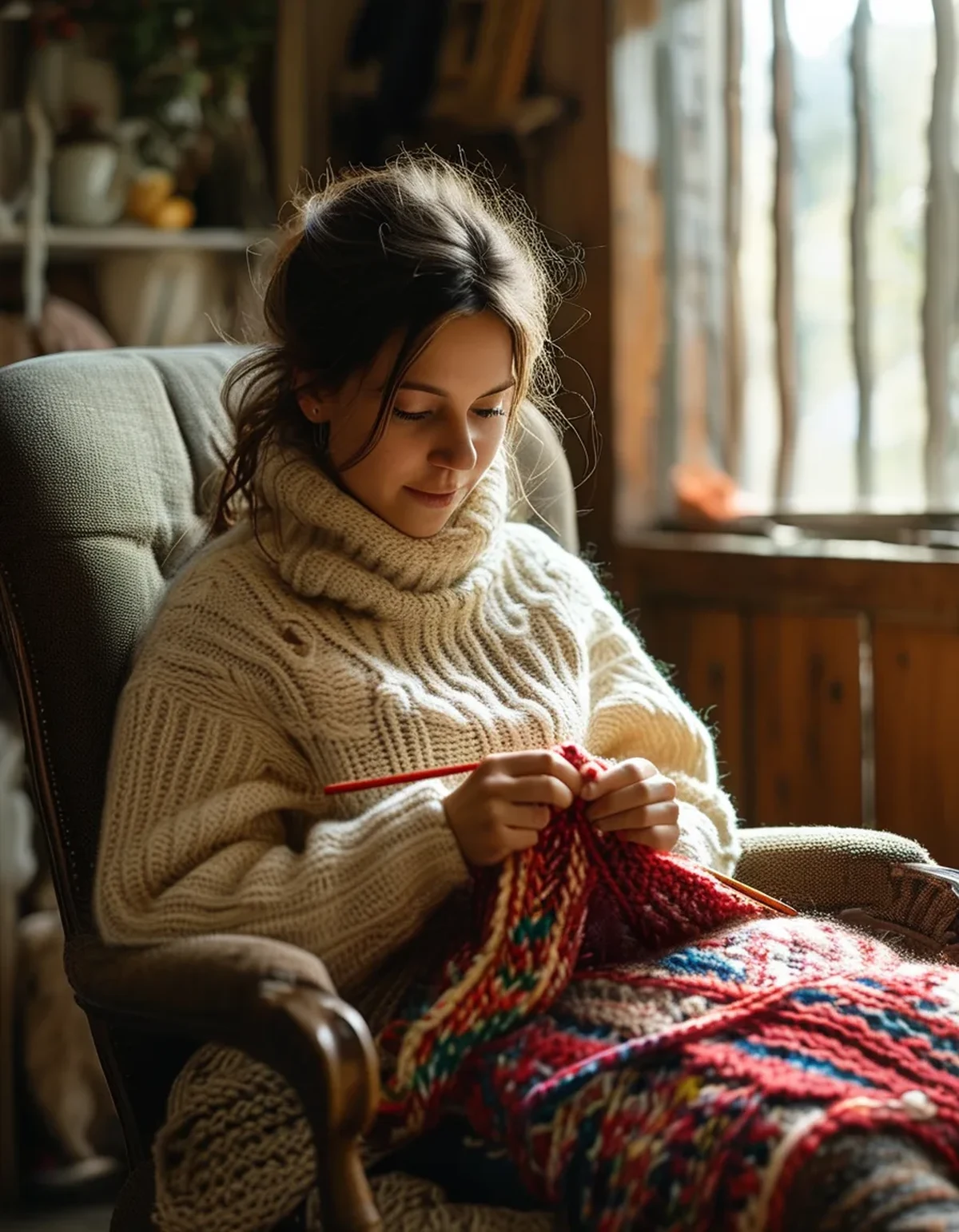
Knitting typically involves looking down at your work for extended, largely uninterrupted periods, which holds the neck in a forward-flexed position that static-loads the neck and upper back muscles far more than the same posture held briefly would. Unlike many activities with natural posture breaks, knitting’s absorbing, repetitive nature means people often hold this position for much longer stretches than they realize.
Shoulders also tend to creep upward and forward during focused, careful hand work like knitting — a subtle tension response to concentration — which compounds the neck strain by adding upper trapezius tightness on top of the forward head position.
What setup changes actually reduce this strain?
Raising your knitting work closer to eye level — using a pillow on your lap, an adjustable chair height, or simply sitting more upright rather than slouched into a couch — reduces how far forward your neck has to tilt to see your stitches clearly. Even a modest reduction in head-tilt angle, sustained over a long session, meaningfully reduces cumulative neck strain.
Periodically and consciously dropping your shoulders away from your ears, perhaps every 10-15 minutes or at natural stopping points like finishing a row, interrupts the gradual shoulder-creep pattern before it accumulates into real tightness by the end of a session.
What Nobody Tells You About Chair and Lighting Setup
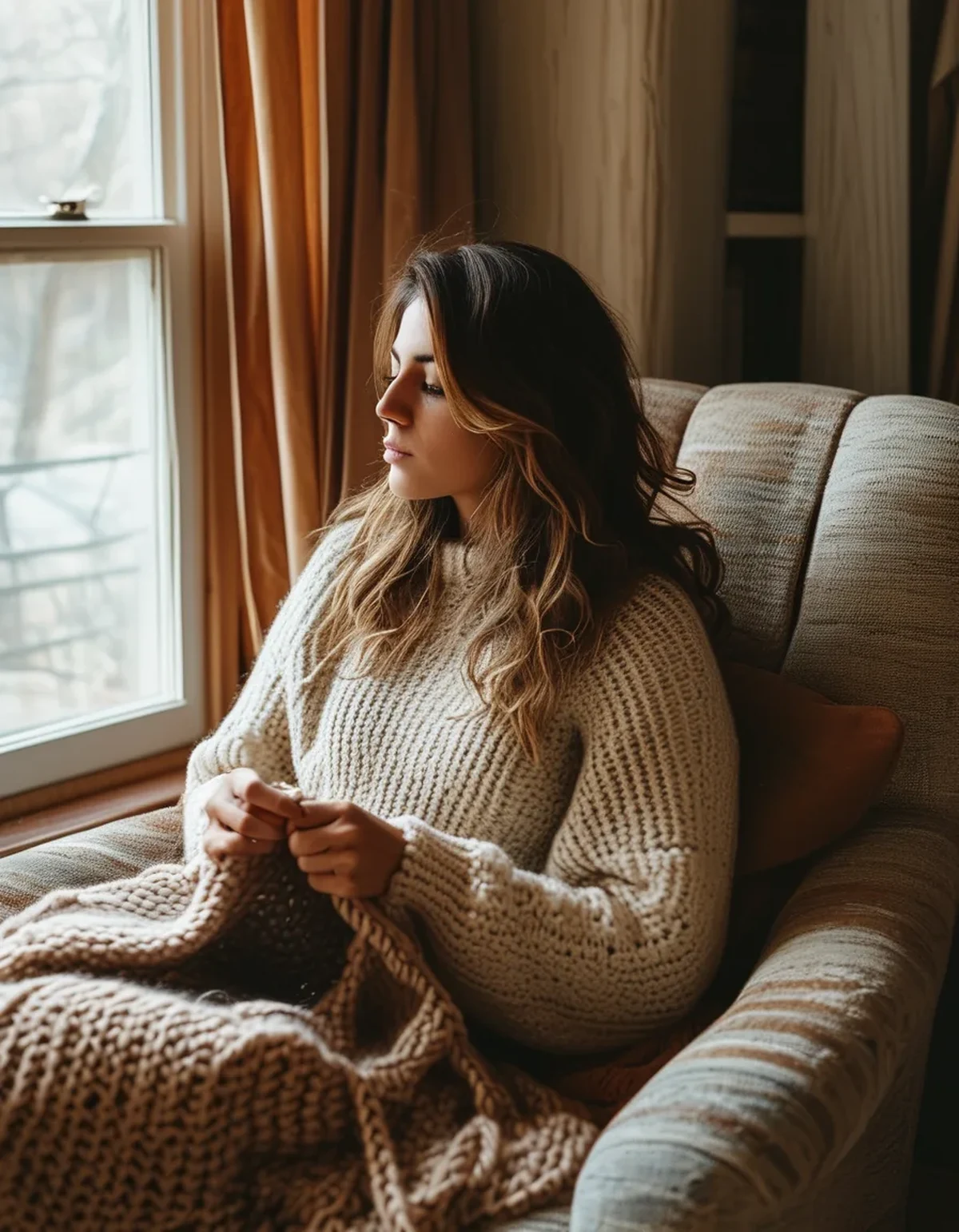
Poor lighting is an underrated contributor — squinting or leaning forward toward your work to see stitches clearly in dim light adds an additional forward-lean on top of the standard knitting posture, compounding neck strain beyond what the activity alone would cause. A dedicated, well-positioned task lamp aimed at your work, rather than relying on ambient room lighting, removes this compounding factor.
Chair choice matters too — a chair without back support, or one that encourages slouching, changes your baseline posture before knitting-specific strain is even added on top, meaning the same knitting session in a supportive chair versus a slouchy couch can produce meaningfully different discomfort levels.
5 Mistakes That Make Knitting Posture Worse
1. Knitting on a low, soft couch without back support for extended sessions.
2. Working in dim lighting, adding an extra forward lean to see stitches.
3. Never taking posture breaks during long, absorbing knitting sessions.
4. Ignoring shoulder tension until it’s already built into significant tightness.
5. Holding needles with unnecessarily tight grip tension, adding to overall upper body tension beyond what’s needed.
FAQ: Knitting Posture Questions, Answered
How often should I take a posture break during a long knitting session?
Many people find checking in every 15-20 minutes — dropping shoulders, briefly looking up and around — sufficient to prevent significant buildup of tension.
Does a knitting pillow or lap desk really help with posture?
Yes — raising the work height even modestly reduces the forward neck tilt angle, which adds up meaningfully over a long session.
Is it worth doing neck and shoulder stretches specifically for knitting?
Brief stretches (gentle neck rolls, shoulder blade squeezes) between sessions or during breaks can help counteract the sustained forward-flexed posture knitting encourages.
TL;DR:
- Sustained forward head tilt while looking down at stitches is the main driver of knitting-related pain
- Raising your work closer to eye level reduces the neck strain angle meaningfully
- Poor lighting adds an extra forward lean — a dedicated task lamp helps prevent this
- Periodic conscious shoulder-dropping interrupts the gradual tension creep during long sessions.
Keep Reading
This article is for general informational and styling purposes only. Fit, sizing, and product availability may vary.