After the Scarf: Choosing a Second Project That Won't Break You
Quick Answer: After your first scarf, add exactly one new skill per project. The ladder runs scarf (knit stitch) → dishcloths (purl) → simple hat (knitting in the round, decreases) → fingerless mitts (small circumference) → then sweaters. The beginner hat is the ideal second project: about a week of evenings, and you’ll wear it in public.
The first scarf is done. Lumpy, beloved, historically significant.
Now comes the genuinely dangerous moment — the second project, where ambition (a cabled sweater!) meets reality (you know one stitch). This is where most people either quit or accidentally set themselves up for years of enjoyment.
The skill ladder exists for exactly this junction. Climb it in order and knitting keeps its joy.
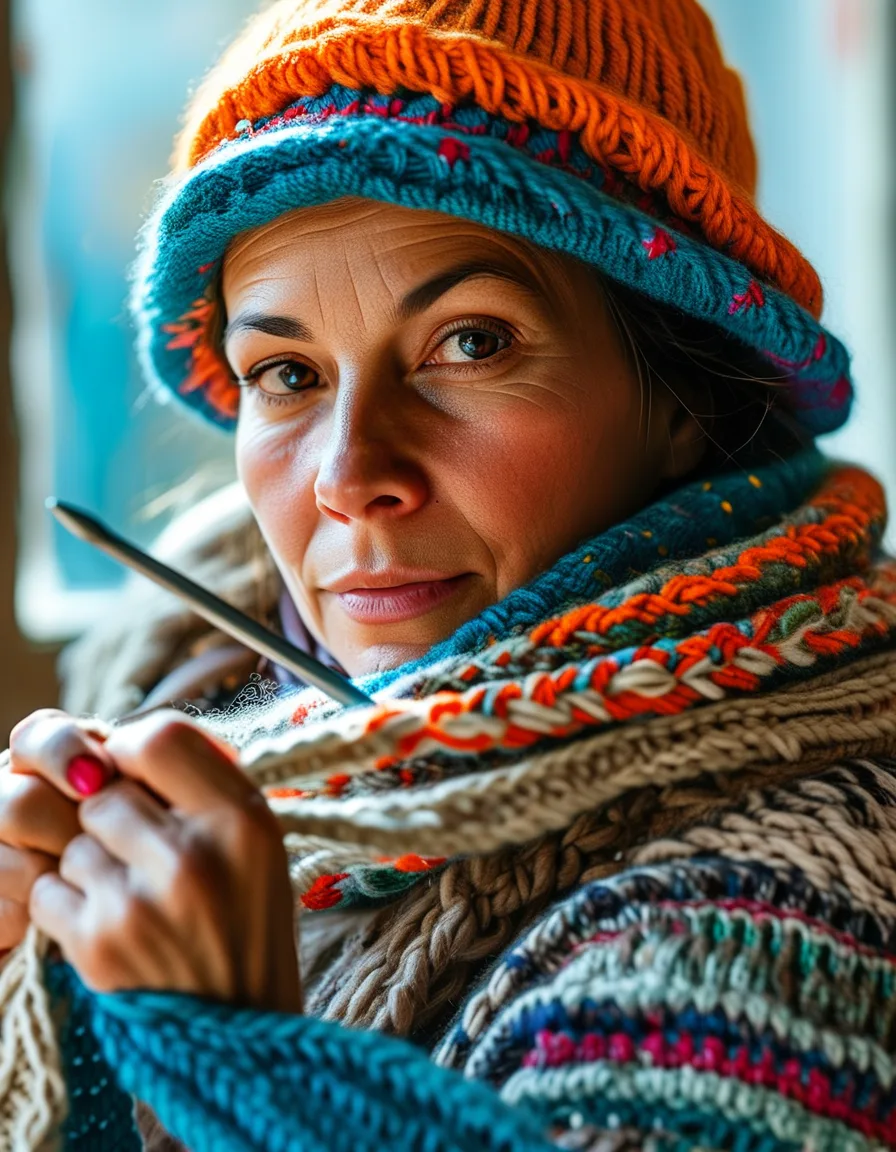
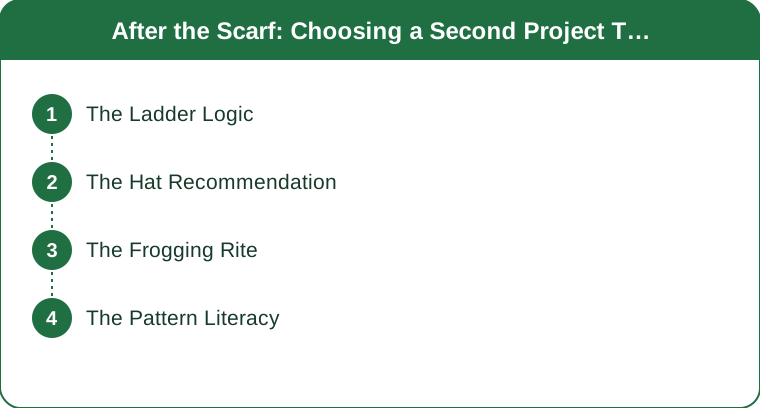
What Should the Second Project Be?
The rule is simple: one new skill per project.
The ladder:
- Scarf — the knit stitch. (Done.)
- Dishcloths — the purl stitch, plus texture patterns in miniature. Small, fast, and genuinely useful.
- Simple hat — knitting in the round and your first decreases.
- Fingerless mitts — working a small circumference, and a thumb.
- Then the sweater conversations can start.
Each rung adds one thing. That keeps frustration below the quitting threshold, which is the actual metric that matters for a hobby.
Skipping to a cabled sweater from a scarf is technically possible. It’s also how a $90 bag of yarn ends up in a closet for four years.
Why Is the Hat the Ideal Second Project?
Because it hits every criterion at once.
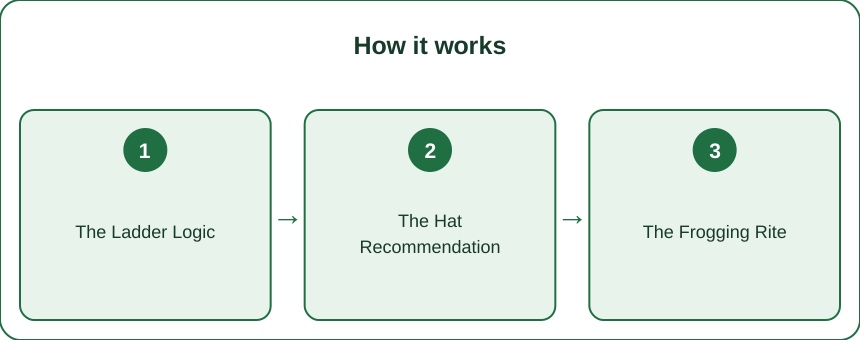
It takes about a week of evenings — short enough to finish before enthusiasm fades. It teaches circular needles and decreases, which are the two techniques that unlock most of what comes next. And it produces something you wear in public and get complimented on, which is a real motivational input, not a trivial one.
There’s also a quiet bonus: pattern-reading initiation. By row ten, k2tog stops looking like cryptography and starts looking like an instruction.
If dishcloths sound boring, go straight to the hat. Just accept you’ll be learning purl and decreases at the same time.
What Is Frogging, and Why Does Everyone Talk About It?
At some point you will rip out rows of work. Knitters call this frogging — because you “rip it, rip it.”
This is not failure. It’s the craft’s oldest rite of passage, and yarn is gloriously reusable — unravel it, wind it back into a ball, and it’s ready to go again. Wind it around something and steam it lightly if it’s kinked.
Every experienced knitter has frogged whole sweaters. Some have frogged the same sweater twice. Welcome to the guild.
The useful mindset shift: rows are not sunk cost. They were practice, and practice is what you’re actually buying with the yarn.
How Do You Read a Pattern Without Panicking?
Second projects introduce shorthand, and the shorthand is finite. Learn about a dozen abbreviations and you can read most beginner patterns.
The starters:
- CO — cast on
- BO — bind off
- k / p — knit / purl
- k2tog — knit two together (a decrease)
- rnd — round
- st / sts — stitch / stitches
- rep — repeat
- PM — place marker
Every pattern site has an abbreviations page. Keep it open in a tab; nobody memorizes these on purpose, they just absorb them.
For anything stubborn, video tutorials decode it in ninety seconds. Search the abbreviation plus “knitting” and someone has filmed it in close-up.
And believe the difficulty ratings. “Easy” means easy. “Intermediate” means next year, and there’s no prize for finding that out the hard way.
5 Mistakes Everyone Makes
- Jumping to a sweater second. Two hundred grams of yarn and forty hours is a lot to spend discovering you don’t like purling.
- Skipping the gauge swatch on the hat. A hat that comes out two inches too small is a frog, not a hat. Twenty minutes of swatching saves a week.
- Buying expensive yarn for a learning project. Practice on something cheap and smooth. Save the hand-dyed skein for project five.
- Choosing dark, fuzzy yarn. You can’t see your stitches, which makes every mistake invisible until it’s ten rows old. Light, smooth, solid-color yarn for anything new.
- Treating frogging as failure. It’s the single most normal thing in knitting. Rip it, rewind, carry on.
FAQ
How long should a beginner hat take?
Roughly 8–12 hours of knitting for most beginners — about a week of evenings. The first hat always takes longer than the second, which is part of why the second one feels so good.
What needles do I need for knitting in the round?
A 16-inch circular needle in the pattern’s called-for size handles most adult hats, plus double-pointed needles or a longer circular for the crown decreases when the stitch count gets small. Many patterns list both.
Do I really need to swatch?
For a scarf, no. For anything that has to fit — hats, mitts, sweaters — yes. Gauge is what turns a pattern’s measurements into your finished size, and it’s the difference between a hat and a very nice cup cozy.
What if my stitches look uneven?
They will at first, and evenness comes almost entirely from mileage rather than technique fixes. Blocking — wetting and shaping the finished piece — also smooths out far more than beginners expect.
TL;DR:
- One new skill per project; that’s the entire ladder logic
- Scarf → dishcloths → hat → fingerless mitts → sweater
- The beginner hat is the ideal second project: a week of evenings, worn in public
- Frogging is normal — yarn is reusable and rows were practice
- Learn about a dozen pattern abbreviations; keep the glossary tab open
- Believe the difficulty ratings, especially “intermediate”
- Light, smooth, cheap yarn for anything you’re learning on
- Swatch for anything that has to fit
Dishcloth or hat next, one new skill at a time, frogging as tradition. The sweater is coming — via a ladder that keeps every rung fun. The scarf was chapter one, not a fluke.
Keep Reading
This article is for general informational and styling purposes only. Fit, sizing, and product availability may vary.