Why Your Knitting Tension Keeps Changing Mid-Project (and How to Fix It)
Quick Answer: Inconsistent knitting tension is usually driven by changing hand grip pressure as focus or fatigue shifts, not a fundamental skill problem — tension tends to tighten when concentrating hard (like during a tricky pattern section) and loosen when relaxed or distracted, and simply becoming aware of this link is often enough to start correcting it.
Most knitters assume uneven tension means they need a completely different technique. Usually it just means noticing when concentration is quietly changing their grip.
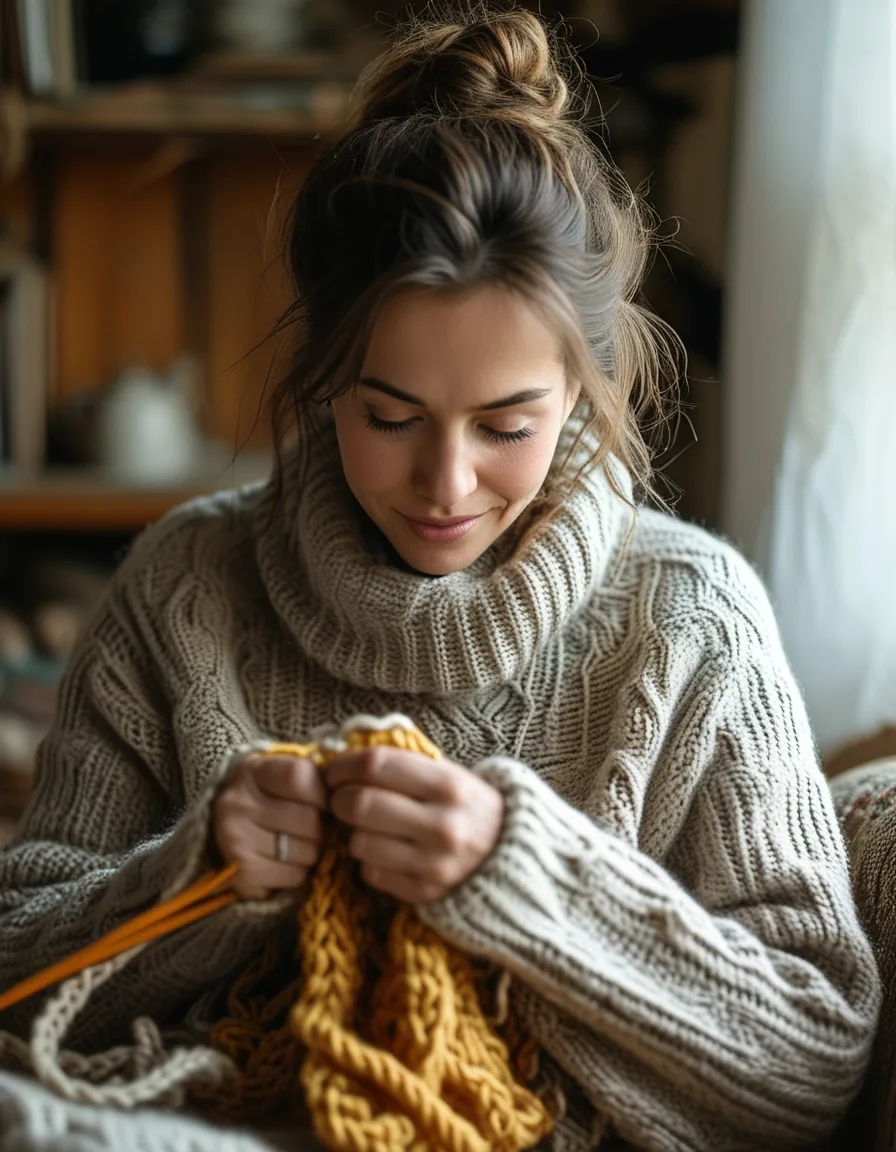
Why does tension tighten during difficult pattern sections?
When focusing hard on a tricky stitch pattern or fixing a mistake, hand and forearm muscles unconsciously grip tighter, which pulls the working yarn with more tension than during simpler, more automatic stretches of knitting.
This is a very common and largely unconscious response — the tension change isn’t really about knitting skill, it’s a byproduct of concentration-related muscle tension.
Why does tension loosen during long stretches of simple knitting?
During long stockinette sections or while watching TV, hands relax into a more automatic rhythm, and that relaxed grip often produces looser stitches compared to sections that required conscious attention.
This is why many knitters notice a visible tension shift right at the boundary between a plain section and a patterned or fixed section — the mid-project change is often literally traceable to where attention shifted.
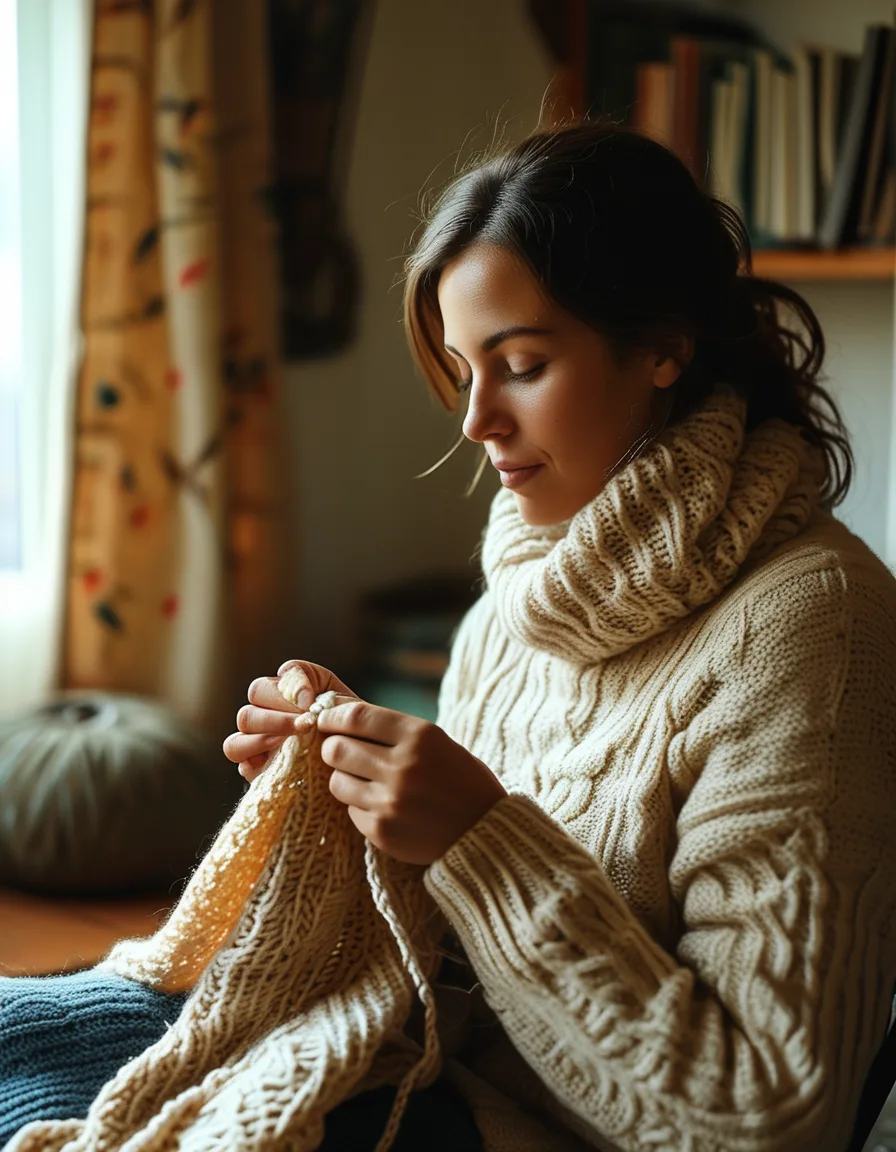
What Nobody Tells You About Tension and Fatigue
Here’s an underrated factor: hand and forearm fatigue over a long knitting session gradually changes grip tension, independent of what you’re consciously focusing on — tension at the start of a session and after two hours of continuous knitting often differs even on the exact same stitch pattern.
This is why many experienced knitters recommend taking short breaks during long sessions, not just for comfort, but specifically to prevent fatigue-driven tension drift within a single project.
What actually helps knitters maintain more consistent tension?
- Taking short breaks every 30-45 minutes during long sessions to reset hand fatigue-driven tension drift
- Consciously relaxing grip right after finishing a tricky or attention-heavy section, since that’s the highest-risk transition point
- Blocking the finished piece, which evens out much of the minor tension variation that’s nearly universal even among experienced knitters
- Swatching under realistic conditions (including some distraction) rather than only under focused, ideal conditions, since gauge swatches knit in full concentration can be misleadingly even
FAQ: Knitting Tension Consistency Questions, Answered
Does blocking actually fix uneven tension, or just hide it?
Blocking genuinely evens out minor to moderate tension variation by relaxing and resetting the fibers, though it won’t fully correct extreme inconsistency — for that, addressing the grip habit itself matters more.
Is tension inconsistency more common with certain yarns?
Yes — smoother, slippery yarns (like some silks or superwash wools) show tension variation more visibly than textured or fuzzy yarns that naturally mask minor unevenness.
Does using a yarn tensioning tool solve inconsistent tension?
It can help for some knitters by externally regulating yarn feed, but it doesn’t address the underlying grip-fatigue link, so combining it with mindful breaks tends to work better than the tool alone.
TL;DR:
- Tension usually tightens during focused, difficult sections and loosens during relaxed, automatic knitting
- Fatigue over a long session also gradually shifts tension independent of concentration
- Regular breaks and conscious grip-relaxing after tricky sections directly address the root cause
- Blocking evens out much of the remaining minor variation
Uneven tension usually isn’t a skill gap — it’s your hands responding to shifting focus, and that’s fixable with awareness rather than a technique overhaul.
Keep Reading
This article is for general informational and styling purposes only. Fit, sizing, and product availability may vary.