Why Your Gauge Tightens When You Are Stressed
Quick Answer: Grip force rises with psychological stress, which pulls working yarn tighter around the needle and produces smaller stitches. The same knitter can shift a full stitch per inch between a calm evening and an anxious one. The fixes are structural rather than mental: swatch across multiple sessions rather than one, knit body pieces in similar conditions, check gauge mid-piece rather than only at the start, and go up a needle size when you know you are knitting tense.
You swatched. You matched. You did the responsible thing.
Then the second sleeve came out narrower than the first, and the only variable you can identify is that you knit it during a week you would rather not repeat.

Does stress really change your knitting tension?
Yes, and the mechanism is well established outside of knitting.
Psychological stress increases muscle tone generally and grip force specifically. Studies of hand function under stress consistently show elevated grip strength and reduced fine motor variability. Your hands get tighter and less fluid.
In knitting terms:
- Tighter grip on the yarn means more resistance as it feeds, so each wrap sits closer to the needle
- Tighter grip on the needle reduces the small accommodating movements that let stitches settle
- Faster, more forceful motion tends to accompany both
The result is smaller stitches, in both directions. Stitch gauge and row gauge usually shift together, which is why a stressed piece can come out both narrower and shorter.
The magnitude is not trivial. Knitters commonly report shifts of half a stitch to a full stitch per inch across emotional states. Over a 40cm sweater body, one stitch per inch is roughly 4cm of finished width, which is the difference between a fitted sweater and a snug one.
Why does the swatch not catch it?
Because a swatch is one sample from one session, and it inherits that session’s conditions.
You knit a swatch on a Sunday afternoon, unhurried, having decided to enjoy the process. That is close to your calmest possible tension. Then you knit the actual garment over five weeks that include a deadline, a bad night, and a train journey.
The swatch is not wrong. It is unrepresentative.
Three ways swatches mislead specifically:
- Session bias. One sitting, one emotional state, one tension.
- Attention bias. You knit a swatch knowing you will measure it, so you knit more carefully than you knit a sleeve.
- Size bias. A small flat swatch behaves differently from a large piece under its own weight, particularly in the round.
The better protocol: knit your swatch across two or three separate sessions on different days, blocked, and average the result. It is slower and it produces a number that actually predicts your garment.
A useful addition: note your state alongside your gauge. Calm evening, 22 stitches. Tired weekday, 24 stitches. Two data points make the rest of this manageable.
What Nobody Tells You About Tension and Mood
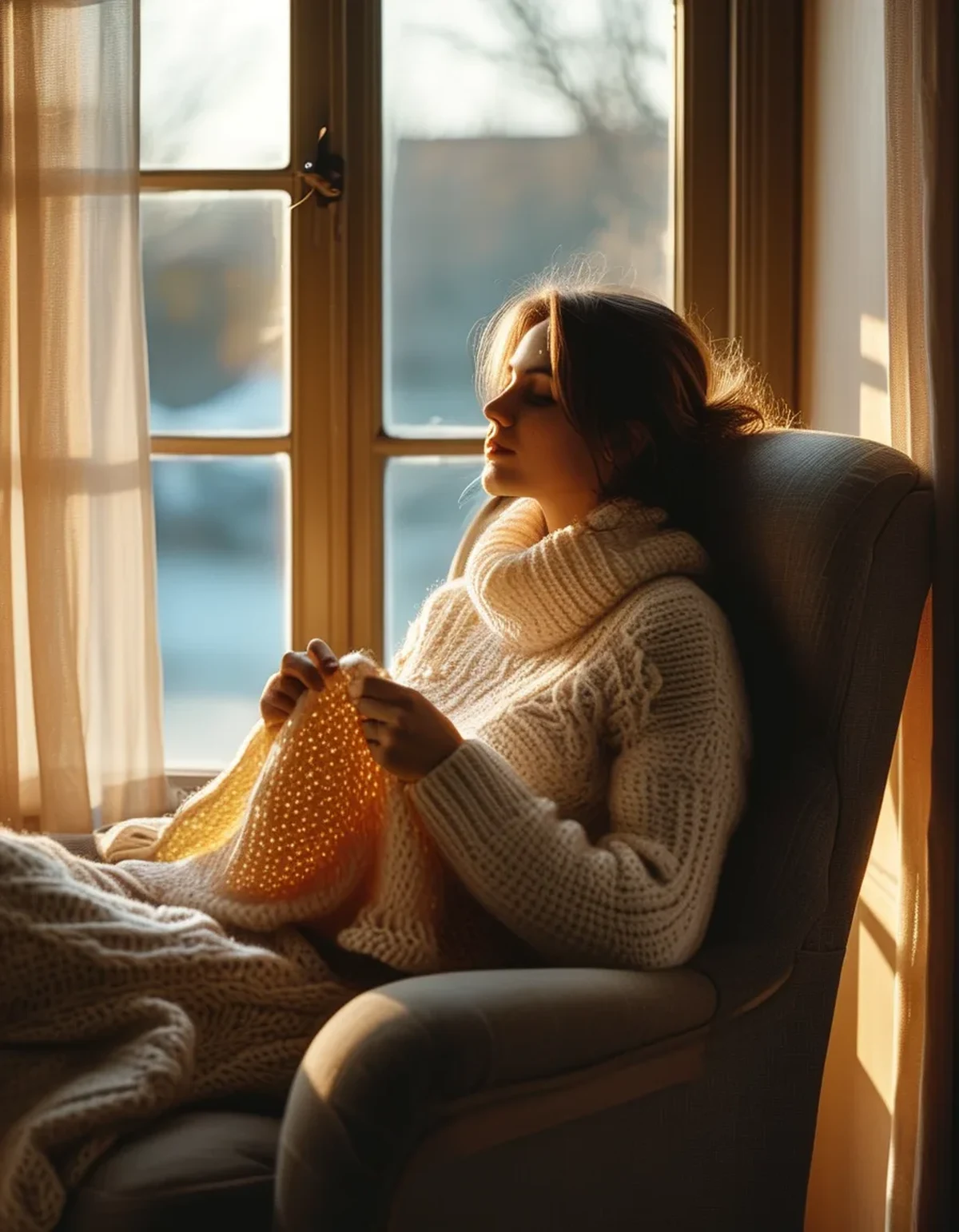
Some of the things that shift your gauge are almost comically mundane, and knowing them is more useful than trying to be calm on command.
Watching something tense tightens your knitting. A thriller, a close match, a difficult phone call. Many knitters can identify the exact rows where a plot turned. If you are knitting a gauge-critical piece, save it for the documentary.
Talking loosens it, usually. Conversation divides attention and reduces the deliberate control that produces tight stitches. Knit-night rows are often looser than home-alone rows.
Caffeine tightens. Not dramatically, and noticeably for some people. Worth knowing if your morning coffee row and your evening tea row have to match.
Cold hands tighten. Grip force increases in the cold and fine control drops. Autumn is when this starts to matter, particularly if you knit near a window or outdoors.
New yarn tightens. Not the yarn, you. A first project in an unfamiliar fiber tends to be knit more carefully and therefore more tightly, and it loosens as you get comfortable. This is why the yoke of a first colorwork sweater is often tighter than the body.
Deadlines tighten twice over. Stress plus speed, together. A gift knit finished the night before is almost always the tightest thing you will make that year.
And the one that surprises people: boredom loosens. Long stretches of plain stockinette in the round, knit while half-attending, come out looser than the same yarn knit while engaged. This is part of why sleeve two often differs from sleeve one, quite apart from stress.
How do you get consistent results anyway?
Structural fixes work. Trying to relax on demand does not.
1. Knit matched pieces in matched conditions. Both sleeves in similar circumstances, ideally close together in time. If sleeve one was a calm Sunday and sleeve two is a stressed Tuesday, expect a difference and plan for it.
2. Check gauge mid-piece, not just at the start. Measure at 10cm, at 20cm, and at 30cm. A drift of one stitch per inch caught at 10cm costs an evening. Caught at the shoulder, it costs the sweater.
3. Change needle size deliberately when you know you are tense. This is the practical, unsentimental fix. If you are aware you are knitting tight, go up a size for that session rather than trying to knit looser, which almost never works and produces uneven stitches when it half-works.
4. Use a tension-tolerant project for stressful periods. Shawls, scarves, blankets, and anything where 5 percent of width does not matter. Save the fitted garment for stable weeks. This is the single best piece of project-planning advice in this area.
5. Two-minute reset before gauge-critical rows. Put the work down, shake your hands out, roll your shoulders, let your jaw unclench. Grip force follows general muscle tone, and general muscle tone responds to a genuine pause. Not mystical, just physiological.
6. Block honestly. Blocking evens out a lot, and it does not rescue a full stitch per inch. Do not plan around blocking as your correction mechanism.
Seasonal note: the shift into fall is the highest-risk period of the knitting year for this. Holiday deadlines start applying pressure, hands get colder, and everyone picks up gift knitting they have to finish by a date. If you are starting a fitted gift garment now, add a mid-piece gauge check to your notes before you cast on.
FAQ: Knitting Tension Questions, Answered
Can stress really change my knitting gauge?
Yes. Psychological stress raises grip force and reduces fine motor fluidity, producing smaller stitches. Shifts of half a stitch to a full stitch per inch between calm and stressed sessions are commonly reported.
Why did my second sleeve come out different?
Usually different conditions rather than different technique. Emotional state, temperature, attention level, and familiarity with the yarn all shift tension. Knitting matched pieces close together helps most.
Should I try to knit looser when I am tense?
Go up a needle size instead. Deliberately knitting looser tends to produce uneven stitches, whereas a larger needle gives you consistent stitches at the gauge you need.
TL;DR:
- Stress raises grip force, which produces smaller stitches. A full stitch per inch of drift is normal, and that is 4cm across a sweater body.
- Swatches mislead because they sample one calm, attentive session. Swatch across two or three days and average.
- Check gauge at 10, 20, and 30cm rather than only at the start. Drift caught early costs an evening.
- When you know you are tense, change needle size rather than trying to knit looser.
Save the fitted garment for a stable week. Give the hard weeks a shawl, where nobody will ever measure anything.
Keep Reading
This article is for general informational and styling purposes only. Fit, sizing, and product availability may vary.