Why Your Knitting Tension Quietly Tightens Up on Stressful Days, Even Without Noticing
Quick Answer: Knitting tension commonly tightens during stressful periods because muscle tension in the hands and forearms increases along with general physical stress, and since knitting tension is directly controlled by how much the yarn is gripped and how far the needles move, that underlying muscular tightness shows up directly in the stitches themselves.
It’s one of the more literal mind-body connections out there — the emotional tightness of a stressful day translates almost directly into the physical tightness of the fabric coming off your needles.
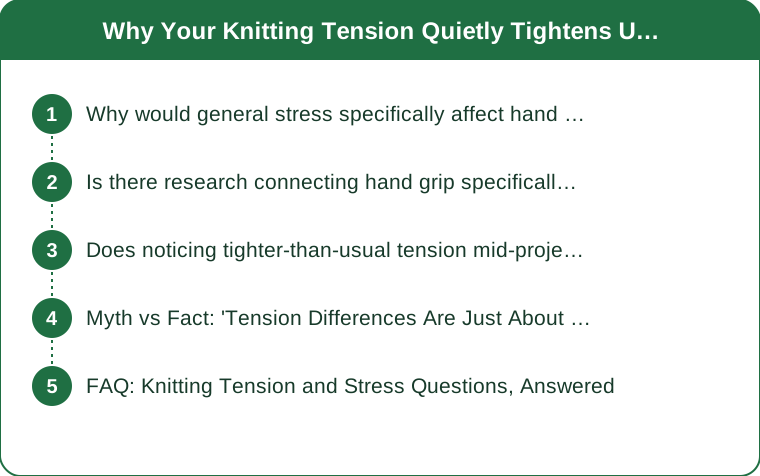
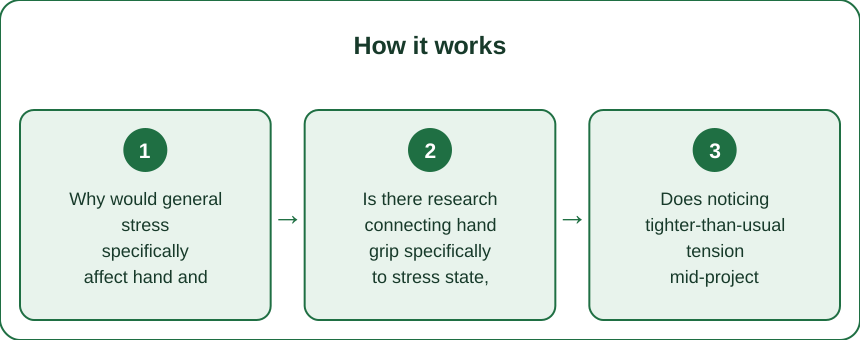
Why would general stress specifically affect hand and forearm muscle tension?
Stress activates a broad physiological response that includes increased baseline muscle tension throughout the body, not just in obviously stress-associated areas like the shoulders and jaw — hands and forearms, being in near-constant fine-motor use during knitting, are a place where that subtle overall tension becomes very noticeable through a task that requires consistent, repeated grip and movement.
Is there research connecting hand grip specifically to stress state, or is this mostly anecdotal among knitters?
There’s a reasonable physiological basis, even if knitting-specific research is limited — grip strength and tension are known to fluctuate with sympathetic nervous system activation (the ‘stress response’), and knitters across many communities consistently and independently report this same tension pattern, which lines up with the broader physiological mechanism.
Does noticing tighter-than-usual tension mid-project actually serve as a useful signal?
Many experienced knitters use it exactly this way — treating a noticeable shift toward tighter stitches as an informal signal to pause, stretch the hands, or take a breathing break, rather than only noticing stress after it’s already built up elsewhere. It’s an unusually direct, physical form of feedback most other daily activities don’t provide.
Myth vs Fact: ‘Tension Differences Are Just About Skill Level’
Myth: inconsistent tension always means a knitter’s technique isn’t developed enough yet. Fact: while technique does affect baseline consistency, even experienced, technically skilled knitters commonly notice day-to-day tension shifts tied to stress or mood — it’s a separate variable from skill, and recognizing that helps avoid unnecessary frustration over natural fluctuation.
FAQ: Knitting Tension and Stress Questions, Answered
Does tighter, stress-related tension actually affect the finished project’s quality or size?
It can, particularly in projects where consistent gauge matters (like a fitted sweater) — a section knit during a notably stressful period can measurably differ in tension from the rest, which is part of why some knitters deliberately avoid picking up a precision gauge-dependent project during acutely stressful days.
Are there specific techniques to consciously loosen grip and tension while knitting?
Consciously relaxing the shoulders and taking a few slow breaths before resuming, along with periodically shaking out the hands during a session, are commonly recommended and generally effective ways to reset physical tension mid-project.
Is it normal for tension to also loosen unusually, not just tighten, during certain emotional states?
Yes — some knitters report looser stitches during fatigue or low-energy states rather than tightness, since the mechanism (reduced consistent grip control) can shift tension in either direction depending on the individual and the specific state.
TL;DR:
- Stress increases baseline muscle tension throughout the body, including the hands and forearms
- Since knitting tension is directly controlled by grip and hand movement, that stress shows up in the stitches
- Noticing tighter-than-usual tension can serve as a useful, direct signal to pause and reset
- Tension shifts from stress are a separate variable from skill level, even for experienced knitters
Tighter stitches on a hard day aren’t a flaw in your technique — they’re your hands honestly reporting what the rest of you is carrying.
Keep Reading
This article is for general informational and styling purposes only. Fit, sizing, and product availability may vary.