Why Your Knitting Gauge Quietly Shifts Partway Through a Project — Even With the Same Yarn
Quick Answer: Gauge often drifts mid-project because hand tension relaxes as muscle memory sets in and stress or focus levels shift over a knitting session — a swatch knit in 15 focused minutes doesn’t capture how your tension behaves over hours of a real project. Checking gauge again at intervals, not just once before casting on, catches drift before it affects fit.
Your swatch measured perfectly. Fifty rows in, the fabric looks looser and the piece is measuring bigger than the pattern predicted. Your yarn and needles didn’t change — your hands relaxed into a different rhythm.

Why would your tension actually change without you noticing?
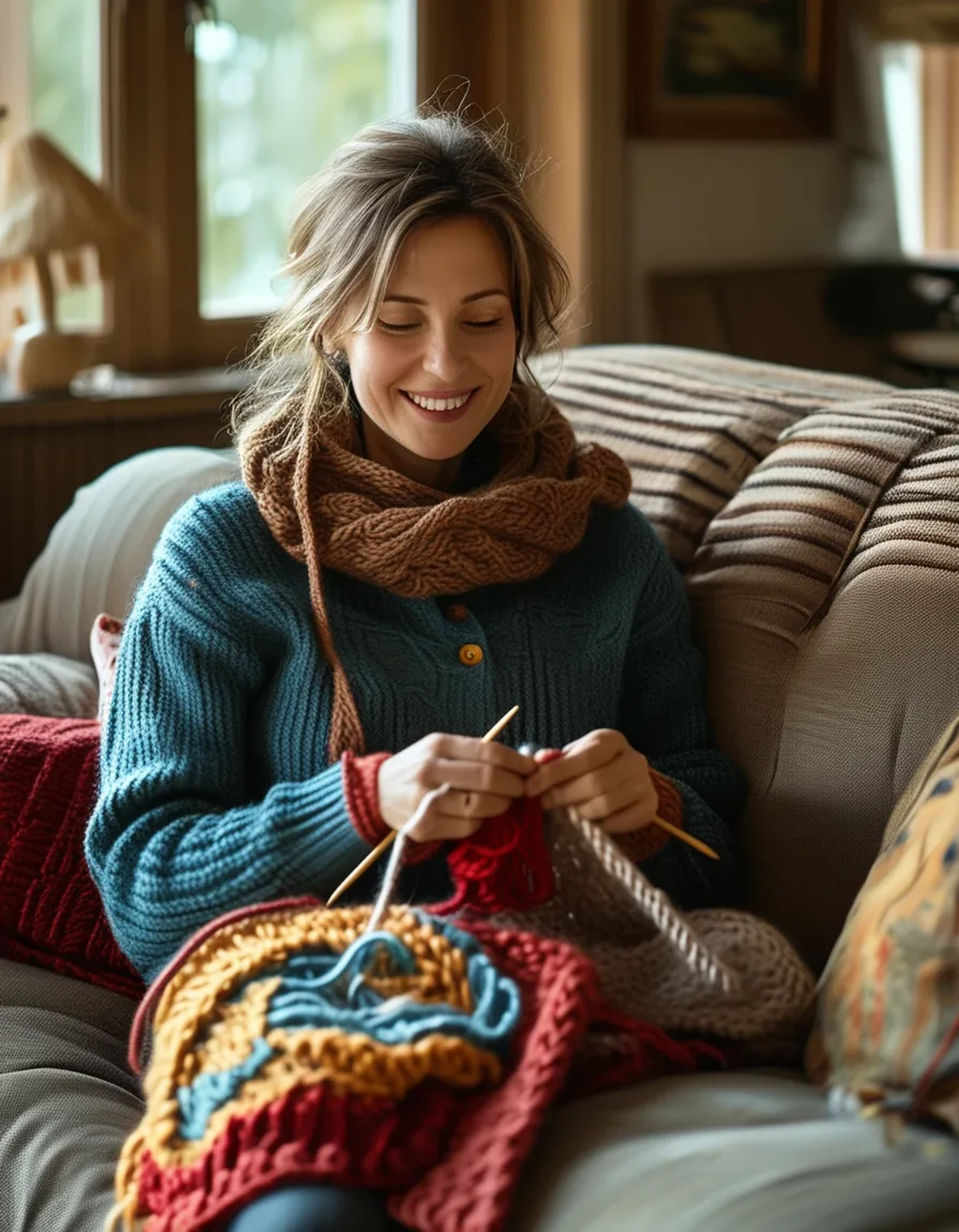
As a stitch pattern becomes automatic, your hands often relax and let more slack into each stitch, since early conscious effort to maintain even tension fades once the motion becomes muscle memory. This is a well-documented pattern among knitters — tension frequently loosens over the course of a project, less commonly tightens.
Stress and focus also play a role: many knitters report tighter stitches during stressful periods and looser ones when relaxed, meaning your emotional state during a knitting session can subtly show up in the fabric.
Does this mean a single swatch is basically useless?
Not useless, but incomplete on its own — a swatch is a good starting checkpoint, but a single small sample knit in a few focused minutes doesn’t represent how tension behaves over the hours a full project actually takes. Treating the swatch as your only gauge check is where the mismatch tends to show up later.
A swatch is best used to confirm you’re in the right general range before casting on, then supplemented with periodic checks during the project itself.
How often should you actually re-check gauge during a project?
Measuring a small section every few inches of progress, especially at natural pause points, catches drift early enough to correct it — either by consciously tightening your tension for a few rows or adjusting needle size if the drift is consistent and significant. For a large project like a sweater, checking at each major section (body, sleeves) is a reasonable minimum.
Catching a half-stitch drift early is a much smaller fix than discovering a full size difference once the piece is finished and doesn’t match the pattern’s measurements.
What Nobody Tells You About Gauge Consistency
Nobody tells you that even experienced knitters see gauge drift — it’s not a beginner-only problem, since the same muscle-memory relaxation happens to anyone repeating a stitch pattern for long enough. The difference is that experienced knitters check and correct for it periodically instead of assuming their first swatch holds for the whole project.
They also don’t tell you that switching needle material (metal to wood, for example) partway through a project can independently shift tension too, separate from your hand relaxing.
FAQ: Knitting Gauge and Tension, Answered
Can changing needle size mid-project fix a gauge drift?
Yes — if drift is consistent and measurable, switching to a needle size up or down by a fraction can correct it without needing to reknit anything already done.
Is it normal for gauge to differ between the swatch and the actual project?
Some small drift is common and expected; the goal of regular checking is catching it before it becomes large enough to affect final fit.
Does blocking fix gauge inconsistency within a finished piece?
Blocking can even out minor inconsistencies visually, but it won’t fully correct a significant tension drift that changed the actual stitch dimensions throughout knitting.
TL;DR:
- Tension often loosens as a stitch pattern becomes automatic through muscle memory
- Stress and focus levels during a session can also subtly shift how tight you knit
- A single swatch is a good start but doesn’t capture hours of project-long tension behavior
- Re-check gauge every few inches, especially at major project milestones
Gauge drift isn’t a sign you’re doing something wrong — it’s a normal side effect of getting comfortable, and catching it early keeps a project’s fit on track.
Keep Reading
This article is for general informational and styling purposes only. Fit, sizing, and product availability may vary.