Why Your Knitting Tension Changes With Your Mood
Quick Answer: Knitting tension tracks your nervous system. Stress raises muscle tone in the hands and forearms, so anxious evenings produce tighter stitches, while relaxed sessions knit looser - which is why a scarf worked across a difficult month can visibly change width. The fix runs in both directions: mechanical habits like wrapping consistency and needle choice stabilise the fabric, while the knitting itself, done with attention to rhythm and breath, lowers the stress that caused the tight rows. Your gauge is data. Most knitters just never think to read it.
You hold the finished scarf up to the light and there it is - a dense, narrow band about two-thirds of the way down. You can date it. That was the week everything happened at once.
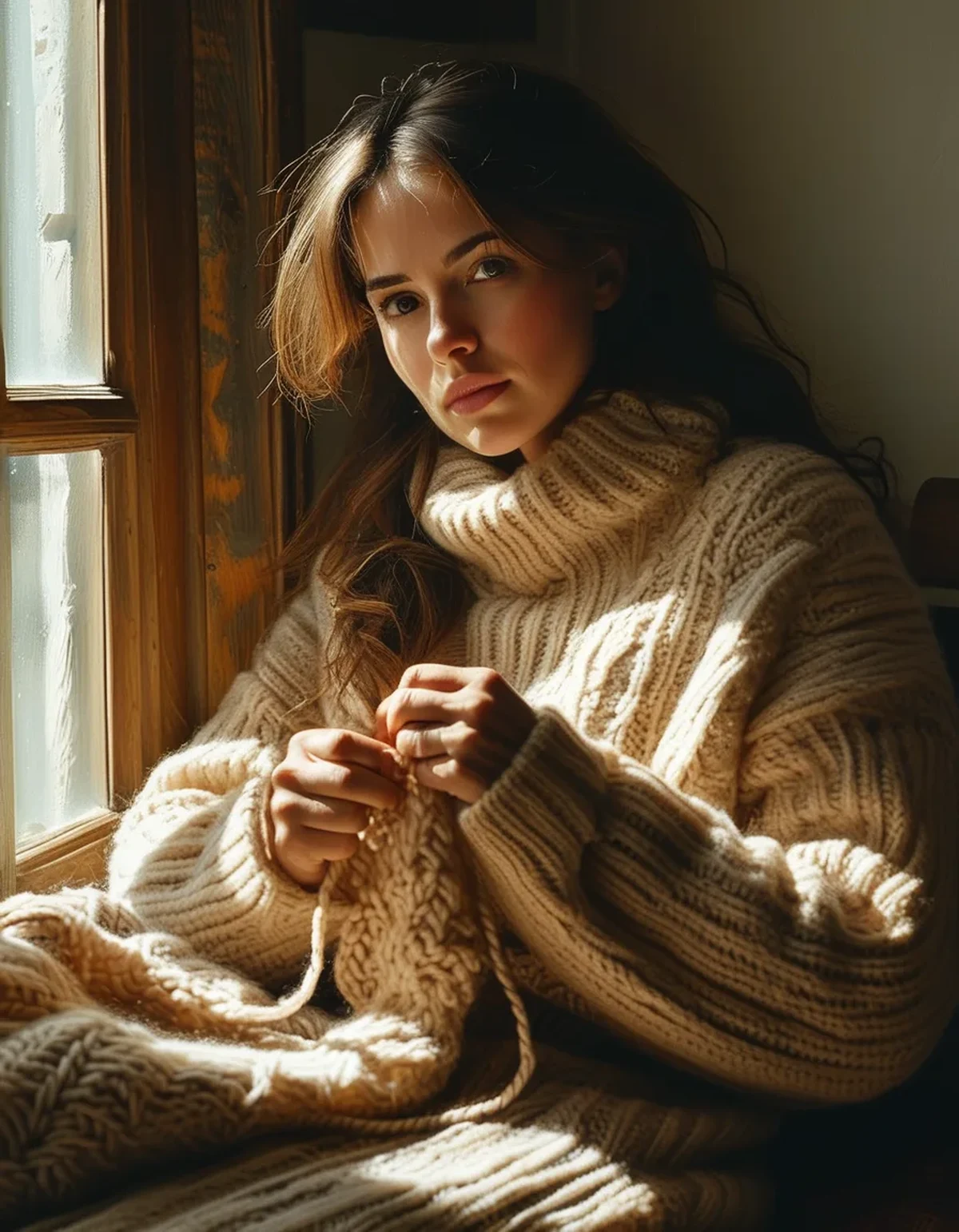
Why does stress physically change your stitches?
The mechanism is real and runs straight from your state of mind to the yarn.
Stress raises resting muscle tone. Under pressure, the nervous system holds muscles - especially hands, forearms, shoulders, jaw - at a higher baseline tension. You are gripping everything slightly harder, including two needles and a strand of wool.
Tension in knitting is literally yarn tension. The size of each stitch is set by how much yarn you allow around the needle, which depends on how firmly the working yarn is held against your fingers. A stressed hand feeds yarn grudgingly; the loops close smaller.
The effect compounds row by row. Tight stitches are harder to work into, which slows you, frustrates you, and tightens you further. Every knitter knows the session where the fabric seems to be fighting back - it is, because you are.
Speed changes the fabric too. Anxious knitting tends to be fast, jerky knitting, and rushed stitches are uneven stitches - tension varying within the row, not just between rows.
Even your breathing shows up. Shallow breathing and raised shoulders shorten the smooth arm movements good tension depends on. Knitting is closer to a fine motor sport than it looks, and it reports your state honestly.
Which is why the fabric is a log. A consistent knitter produces a fabric diary: loose holiday rows, tight deadline rows, the even stretch of a genuinely calm week. Nothing else in your house records your nervous system this faithfully.
How do you keep tension even when life is not?
You cannot schedule calm, but you can build habits that hold the fabric steady through weather.
Fix your yarn wrap and never vary it. The single biggest mechanical stabiliser is a consistent path of yarn through your fingers - same wraps, same tensioning finger, every session. When the hold is automatic, mood has less room to change the feed.
Let the needle set the stitch size. Form each stitch around the needle shaft, not the tapered tip. Tip-knitting is the classic source of accidental tightness, and stressed knitters drift toward the tips without noticing.
Slow down ten percent on hard days. Deliberately unhurried stitches even out the jerkiness that anxiety adds. You lose a little speed and gain a fabric that does not need explaining later.
Warm up like it is exercise, because it is. Two minutes of wrist circles and finger stretches, then a few easy garter rows on scrap before touching the real project. Cold, stiff hands knit tight until they loosen - many knitters’ first twenty minutes run visibly tighter.
Match projects to seasons of life. A lace chart during a stressful month is a fight; ribbing and stockinette are rhythm you can sink into. Keep one simple comfort project on the needles at all times for exactly those weeks.
And check in with your shoulders at row ends. Shoulders down, jaw loose, one slower breath, next row. It sounds slight. Over an evening it is the difference between fabric and evidence.
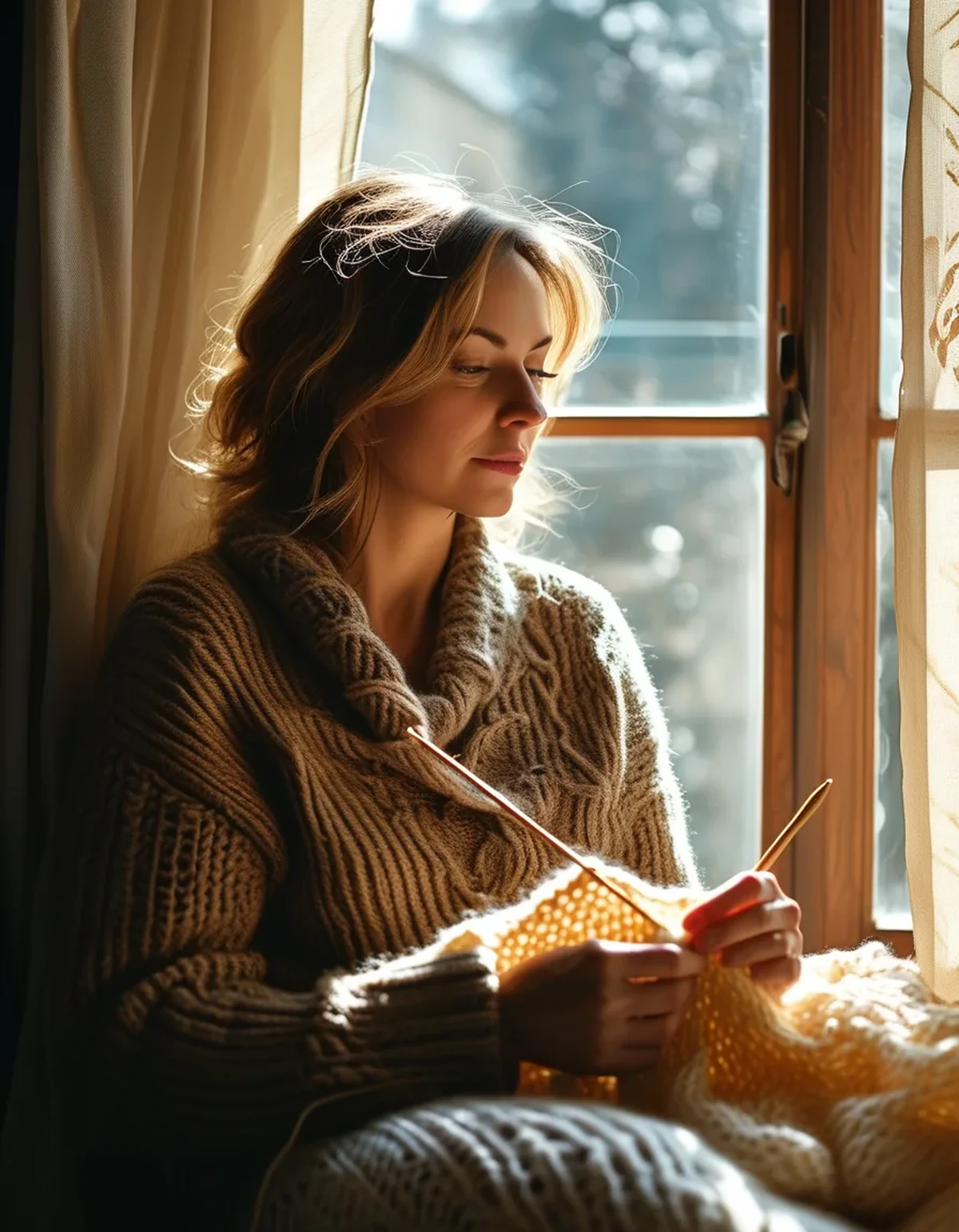
What Nobody Tells You About Reading Your Own Fabric
Blocking forgives more than you fear. A wet block relaxes moderate tension wobbles dramatically, especially in wool. The tight week often softens into the whole once the piece is soaked and laid flat - worth knowing before you rip back a month of evenings.
Purl rows are your tension thermometer. For most knitters, purls run looser than knits, and the gap widens under stress or fatigue. If your stockinette suddenly shows faint stripes, that is rowing-out getting louder - and a sign the session is running tense.
Everyone has a direction they drift. Stress-tighteners are the majority, but a solid minority loosen when distracted - their anxious fabric goes sloppy and open instead. One repeat of pattern knitted during a calm hour versus a stressful one tells you which knitter you are.
The first project after a break always runs odd. Hands lose their calibration in weeks away. Expect the first evening back to knit tight and uneven, and start with something forgiving rather than the sleeve you abandoned.
Metal and wood change your tension. Slippery metal needles let tight knitters’ stitches move and are misery for loose knitters; grabbier wood and bamboo do the reverse. If your tension shifted when you changed needles, the needles did it, not your technique.
And the mood-log works forward, not just backward. Some knitters deliberately keep a plain ongoing piece - a temperature-blanket of the nervous system - and can spot a stressful stretch building in the fabric before they have consciously admitted it. The scarf knows first.
Can knitting fix the tension it records?
Yes - this is the pleasing loop at the centre of the craft. The same activity that logs your stress is one of the better tools for lowering it.
Rhythmic repetition settles the nervous system. Repetitive bilateral movement with a predictable pattern - which is precisely what stockinette is - reliably downshifts arousal, the same broad mechanism behind walking, rowing, and rosaries. Knitters describe entering the rhythm and feeling the day recede; the physiology backs them up.
The demand is just right for busy minds. Simple knitting occupies the hands and a slice of attention, enough to crowd out rumination without demanding real problem-solving. That partial-attention zone is where the calm happens - too easy and the mind wanders back to the worry, too hard and it becomes another stressor.
Use it deliberately as a downshift. Ten minutes of plain rows between work and evening, or before bed instead of the phone, functions as a transition ritual. Same chair, same simple project, hands moving, breath slowing.
Pair rows with breath on the hard days. One stitch per slow exhale for twenty stitches sounds precious and works annoyingly well - it forces the pace down and the breathing deep simultaneously.
Notice the loosening as it happens. Somewhere in a good session the grip softens, the shoulders drop, and the stitches grow a half-size. Learning to feel that shift while it happens is the entire skill of using knitting as regulation.
And let the tight rows stay. You will find them in finished pieces years later - the difficult January, visible and survived. Most crafts erase the process. This one keeps the receipts, kindly.
FAQ: Knitting Tension and Mood Questions, Answered
Why is my knitting tension suddenly tighter?
Check your week before your technique. Stress raises hand and forearm muscle tone, so tense days feed yarn tighter and close smaller loops. New needles, cold hands, and knitting at the needle tips are the other usual suspects.
How do I make my knitting tension more consistent?
Lock in one yarn-wrapping path and never vary it, form stitches on the needle shaft rather than the tip, warm up with scrap rows, and slow down slightly on stressful days. Consistency of habit buffers inconsistency of mood.
Will blocking fix uneven tension?
Moderate unevenness, yes - a wet block relaxes wool remarkably and blends tight stretches into the whole. Severe gauge swings that change the piece’s width will soften but not vanish.
Is knitting actually good for stress?
The rhythmic, repetitive movement reliably settles the nervous system, and simple projects occupy the mind at exactly the level that crowds out rumination. Keep one easy project going for hard weeks - complex charts can have the opposite effect.
Should I rip out rows I knitted while stressed?
Block first, then judge. If the fabric still bothers you, ripping back is always legal. Plenty of knitters leave the tight rows in deliberately - a private record of a week that got knitted through anyway.
TL;DR:
- Stress raises hand tension, and hand tension is stitch tension - your fabric records your nervous system row by row.
- Stabilise mechanically: one consistent yarn wrap, stitches formed on the shaft, a scrap-yarn warm-up, ten percent slower on hard days.
- Keep a simple comfort project for stressful weeks and save the lace for calm ones.
- Blocking forgives most mood wobbles, so soak before you rip.
- Used deliberately - rhythm, breath, a nightly plain-row ritual - knitting lowers the very tension it records.
The tight band in the scarf is not a flaw. It is a week you got through, one stitch at a time, and the fabric kept the minutes.
Keep Reading
This article is for general informational and styling purposes only. Fit, sizing, and product availability may vary.